The Future of Green Mobility in Small and Medium-Sized Cities
Small and medium-sized cities with populations between 50,000 and 500,000 are emerging as key players in the global transition toward sustainable mobility. Unlike large metropolitan areas burdened by decades of car-centric planning and heavy infrastructural complexity, these cities often have more flexibility. Their compact size, tighter social connections and more manageable infrastructural needs make them ideal testbeds for experimenting with new transport strategies.
For much of the 20th century, mobility in many parts of the world was built around the private car. Rising incomes and shifting lifestyles encouraged car dependency even in small urban centers. But this model is becoming increasingly unsustainable. Congestion, declining air quality, traffic noise and the shrinking availability of public space have forced cities of all sizes to rethink their approach. Even cities with fewer than 500,000 residents now face serious challenges when traffic patterns grow faster than the infrastructure designed to support them.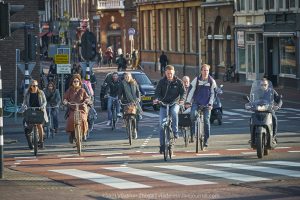
At the same time, more people want cleaner, healthier and more comfortable environments. Transportation sits at the intersection of these needs, becoming a core element of a broader lifestyle shift toward sustainability. For smaller cities, where typical travel distances are short and streetscapes are more intimate, the potential for greener alternatives is particularly high.
The most remarkable feature of cities in this population range is that relatively modest interventions can transform the entire mobility landscape. Short distances make bicycles and e-scooters highly viable. Municipal governments can adjust policies more quickly. Residents often respond faster to changes, especially when they see immediate improvements in comfort and convenience.
For these reasons, small and medium-sized cities have the opportunity to lead the next chapter of sustainable mobility.
Micromobility as a Foundation for New Urban Movement
Micromobility — including bicycles, e-bikes, cargo bikes, and e-scooters — has become one of the most important tools for transforming urban travel in small cities. These modes are flexible, affordable, easy to integrate into existing neighborhoods and well-suited for trips under 5–7 kilometers, which represent the majority of travel distances in such cities.
A compelling example comes from Tartu, Estonia, where coordinated investment in bike lanes, redesigned intersections, separated cycling corridors and a modern bike-sharing network rapidly increased the share of cycling. The city’s compact geography and thoughtful planning made the shift both fast and highly visible.
Another success story is Oulu, Finland, widely known as one of the world’s capitals of winter cycling. With about 200,000 residents, Oulu maintains an extensive cycling network that is plowed and maintained throughout the winter, demonstrating that climate does not have to be a barrier to cycling when infrastructure is reliable and well-designed.
In North America, Portland, USA, though larger, provides a model that smaller neighboring cities — such as Corvallis or Eugene — have successfully adapted. Portland’s protected bike lanes, intersection redesigns and city-supported micromobility services created a culture of sustainable travel. Smaller cities studied and replicated the same solutions at reduced scale, showing that you don’t need megacity budgets to innovate.
Latin America provides an unexpected but insightful example in Cuenca, Ecuador. The city introduced an extensive network of bike lanes and a free public bike-sharing system. Micromobility was also used as a tool to protect the historic center from vehicle congestion and pollution, reinforcing the cultural and environmental value of the area.
In Asia, Phuket, Thailand showcases a hybrid model where both residents and visitors make use of micromobility within dedicated corridors and shared mobility zones. This demonstrates the potential for smaller cities with active tourism sectors to reduce congestion and promote healthier urban design.
Across these cases, micromobility is not a trend but a structural transformation. It improves urban safety, expands mobility options, reduces emissions, and helps cities reclaim space for people rather than cars.
Municipal Collaboration as the Core of Sustainable Transport Reform
No city can successfully transition to green mobility without strong municipal leadership and local partnerships. Local governments shape the policy frameworks, infrastructure priorities and travel behaviors that enable lasting change.
A telling example comes from Trondheim, Norway. The city prioritizes cooperation among municipal departments, universities, mobility companies and community organizations. This led to new “smart” bus stops, upgraded cycling networks and redesigned streets that place people, not vehicles, at the center of planning.
Similarly, Heidelberg, Germany has embraced a long-term vision for zero-emission mobility. The municipality promotes e-mobility, supports cargo bikes, integrates walking and cycling routes, and invests in neighborhood-level mobility hubs that allow residents to combine micromobility with public transit.
In Latin America, Aguascalientes, Mexico offers a model increasingly adopted by smaller cities in the region. The municipality implemented bike lanes, traffic-calming zones with 30 km/h limits, and partnerships with micromobility operators. Cities such as Tepic and Fresnillo have followed similar paths, adapting the model to their own needs and budgets.

In Japan, Fukuoka — though rapidly growing — demonstrates how close cooperation between local government, universities, and technology firms can create transferable solutions. Nearby smaller cities, including Kitakyushu and Karatsu, now test electric buses, automated bike parking facilities and mobility monitoring systems inspired by Fukuoka’s innovations.
Community organizations and residents also play a vital role. In Haarlem, Netherlands, cycling associations help plan new routes, while citizen groups collect safety data, identify problem intersections and present findings to municipal planners. This form of civic engagement aligns perfectly with the mission of EnviroCitizen.org: empowering communities to advocate for healthier environments.
Table: Roles of Key Actors in the Transition to Green Mobility
| Actor | Primary Role | Examples of Contribution |
|---|---|---|
| Municipal government | Strategy, regulation, infrastructure | bike networks, speed-reduction policies, redesigned streets |
| Local businesses | Innovation and services | shared mobility, charging infrastructure, tech solutions |
| Residents | Adoption, feedback, civic participation | public consultations, pilot programs |
| Community organizations | Education and oversight | safety campaigns, citizen data collection |
When responsibility is shared among government, business, citizens and community groups, sustainable mobility becomes a stable and long-term urban direction rather than a temporary trend.
Existing Models and the Road Ahead
Around the world, small and medium-sized cities already demonstrate that transitioning to green mobility can be both efficient and affordable — often requiring incremental, strategic changes rather than major infrastructure overhauls.
One example is Lund, Sweden, where the city has implemented an integrated system of “soft mobility.” Walking, cycling and public transit are treated as a unified ecosystem, complemented by accessible shared micromobility options. The result is a seamless mobility experience requiring fewer private cars.
In Denmark, several smaller cities near Groningen (a well-known cycling hub) are piloting automated e-bike rental stations linked to bus networks, allowing residents to combine different modes of transportation effortlessly.
In North America, Boulder, USA has spent decades cultivating a culture of sustainable mobility. The city’s “green corridors,” reduced-traffic neighborhoods and well-established public bike system have been replicated by smaller Colorado cities like Longmont and Lafayette.
South-East Asian cities offer additional insights. Malang, Indonesia introduced a bike-sharing network and developed shaded pedestrian and cycling routes known as “cool corridors,” designed for comfort in a tropical climate. These long, tree-lined routes encourage walking and cycling even during warmer months.
Looking ahead, the most promising innovations involve better integration between mobility modes. Bike lanes must connect directly with bus stops, scooter parking areas and car-sharing stations. Electric buses require intelligently placed charging points. Transit hubs increasingly evolve into multifunctional spaces where people can rent a bike, safely store their own, access public transit or use last-mile micromobility.
Digital innovation is equally essential. The concept of Mobility as a Service (MaaS) — integrating all transport modes into one app with unified payment systems — is already active in cities such as Tampere, Finland, and Debrecen, Hungary. These systems use real-time data and smart routing algorithms to optimize travel, making sustainable choices more accessible.
The economic impact is also significant. New businesses emerge around e-bike servicing, micromobility maintenance and mobility tech. Local startups develop monitoring sensors, automated parking or routing tools. Smaller cities often become early adopters because their compact size allows rapid testing and scaling.
As these innovations expand, green mobility becomes not only a transportation strategy but an economic development tool, a public health benefit and a community-building mechanism.
Conclusion
The transition to sustainable mobility in cities with populations of 50,000 to 500,000 is already underway across Europe, North America, Latin America and Asia. These cities possess unique advantages: compact form, responsive governance and the ability to rapidly test and refine new mobility ideas.
Micromobility, when supported by thoughtful planning and accessible infrastructure, helps reduce emissions, reclaim public space, lower noise levels and create healthier daily routines. Collaborative governance — involving municipalities, residents, businesses and community organizations — ensures that mobility reform becomes a durable part of urban policy. Digital tools and integrated networks point the way toward the next generation of mobility systems.
For EnviroCitizen.org, the lesson is clear: smaller cities are not merely following global trends — they are shaping them. Their innovations show how sustainable mobility can be affordable, community-driven and deeply rooted in local identity. These cities demonstrate that the future of transportation is not just cleaner but more connected, inclusive and human-centered.